








Commercial Vegetal Biotechnology Laboratories
Commercial Vegetal Biotechnology Laboratories
Business Model Description
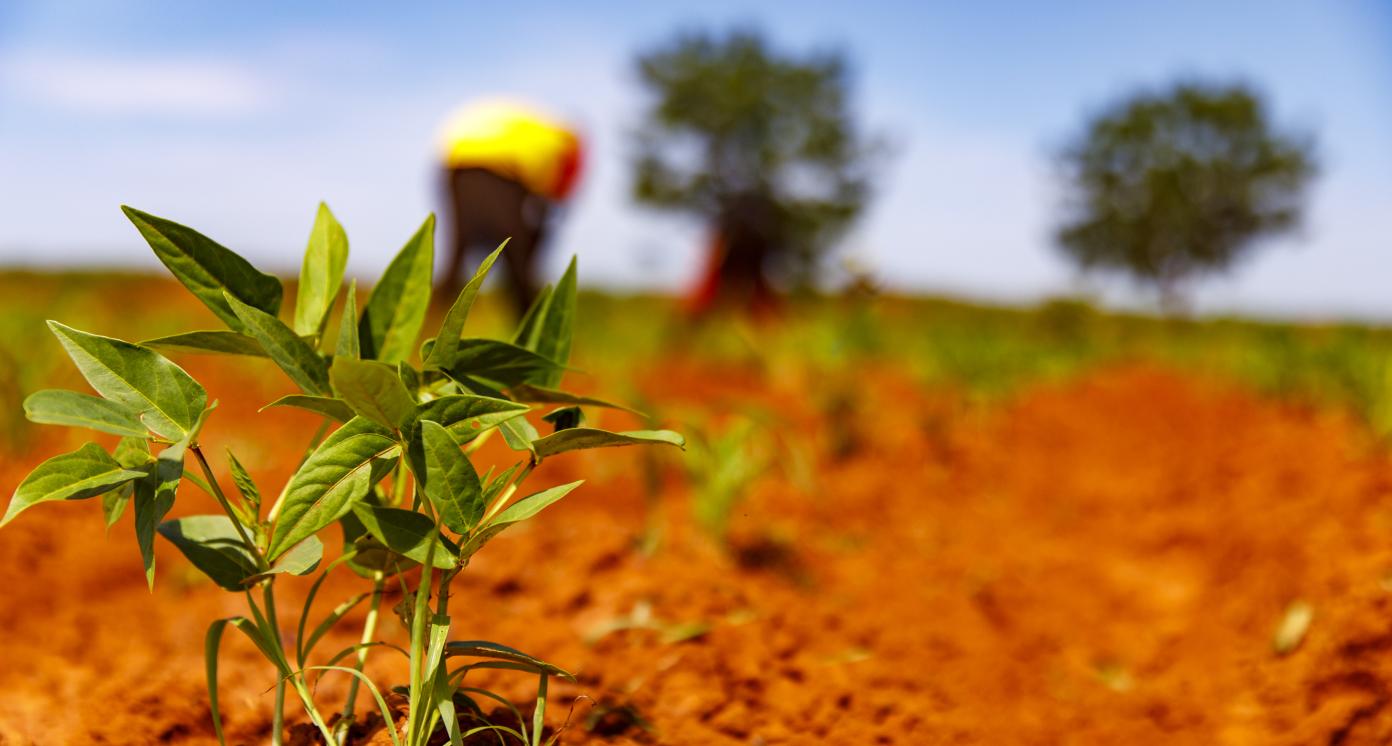
Invest in commercial biotechnology labs that produce non-GMO agricultural inputs, including foundational seeds, in-vitro seedlings of endemic crops, and plant protection products. These labs utilize innovative technologies such as hydroponics, solar power, and automated greenhouses to optimize production. Revenue is generated through three main channels: B2B contracts with agro-processors and certified seed producers, direct sales to medium-scale farmers, and exports to markets. Key crops include cassava, plantain, yam, sugarcane, cotton wheat, soybean, maize, rice, onion, tomato, pepper, potato, groundnut, pineapple, pumpkin and date palm.
Expected Impact
Enhance resilience to pests and drought, reduce costs and reliance on imported foundational seeds, and promote mass production and increased productivity.
How is this information gathered?
Investment opportunities with potential to contribute to sustainable development are based on country-level SDG Investor Maps.
Disclaimer
UNDP, the Private Finance for the SDGs, and their affiliates (collectively “UNDP”) do not seek or solicit investment for programmes, projects, or opportunities described on this site (collectively “Programmes”) or any other Programmes, and nothing on this page should constitute a solicitation for investment. The actors listed on this site are not partners of UNDP, and their inclusion should not be construed as an endorsement or recommendation by UNDP for any relationship or investment.
The descriptions on this page are provided for informational purposes only. Only companies and enterprises that appear under the case study tab have been validated and vetted through UNDP programmes such as the Growth Stage Impact Ventures (GSIV), Business Call to Action (BCtA), or through other UN agencies. Even then, under no circumstances should their appearance on this website be construed as an endorsement for any relationship or investment. UNDP assumes no liability for investment losses directly or indirectly resulting from recommendations made, implied, or inferred by its research. Likewise, UNDP assumes no claim to investment gains directly or indirectly resulting from trading profits, investment management, or advisory fees obtained by following investment recommendations made, implied, or inferred by its research.
Investment involves risk, and all investments should be made with the supervision of a professional investment manager or advisor. The materials on the website are not an offer to sell or a solicitation of an offer to buy any investment, security, or commodity, nor shall any security be offered or sold to any person, in any jurisdiction in which such offer would be unlawful under the securities laws of such jurisdiction.
Country & Regions
- Mali: Bamako
- Mali: Sikasso
- Mali: Koulikoro
- Mali: Ségou
- Mali: Mopti
Sector Classification
Food and Beverage
Development need
In 2024, 13.2 million Malians experienced insufficient food consumption, with 1.4 million facing severe food insecurity. By 2025, 2.9 million people, including refugees and internally displaced persons, will require food security assistance. Climate change and a population expected to double by 2045 will further strain food supplies (2, 8, 12).
Policy priority
Politique Nationale de la Sécurité Alimentaire et Nutritionnelle, 2019 targets: 1) sustainable food availability to meet national demand by 2030; 2) enhanced capacity to prevent, mitigate, and reduce climate risks; 3) improved food accessibility; and 4) better nutritional status for the population (14).
Gender inequalities and marginalization issues
The 2025 INFORM Index, a global risk assessment for humanitarian crises and disasters, ranks Mali as the 14th most vulnerable country to humanitarian crises and natural disasters. As of September 2024, 378,500 people were internally displaced—57% women and girls, and 66% children—mainly due to conflict and flooding. These pressures severely impact food security, underscoring the urgent need for agricultural investment to support vulnerable populations (8, 9, 10, 11).
Investment opportunities introduction
Mali's economy relies heavily on small-scale subsistence and family agriculture, which contributes 35.1% to GDP growth. Investing in climate-resilient technologies, modernization, and market integration offers high returns and development impact, boosting food availability, value-added products, and income (18).
Key bottlenecks introduction
Transportation costs, limited road networks, lack of cold storage, and security risks pose major barriers for investors, restricting supply chain development and weakening food system resilience (16).
Food and Agriculture
Development need
Malian farmers face limited access to quality inputs and infrastructure, leading to just 4.5% of arable land being cultivated and agro-food processing contributing only 6.1% of GDP. Climate change is expected to reduce agricultural productivity by over 40% by 2040, threatening the livelihoods of 80% of Malians, or about 15.3 million people (3, 4, 5, 7, 20).
Policy priority
Plan National d’Investissement dans le Secteur Agricole, 2015-2025 aims to position Mali as one of West Africa's top agricultural producers and an agro-industrial powerhouse, leveraging its agricultural raw materials. This will be achieved through modernizing production systems while preserving the environment and natural resources (15).
Gender inequalities and marginalization issues
In Mali, only 3.7% of women own agricultural land, compared to 44.8% of men, despite women making up 60% of the agricultural workforce and contributing to 80% of food production. On average, women own 0.6 hectares of land, 1.1 hectares less than men, limiting their capacity to generate income (1, 19).
Investment opportunities introduction
Private certified seed producers in Mali depend largely on foreign biotechnology laboratories from West Africa, East Africa, Europe, and Asia for foundational and pre-base seeds. This highlights a significant opportunity for domestic vegetal biotechnology labs, offering cost advantages and potential for local agricultural production growth (30).
Key bottlenecks introduction
High competition from imported goods and limited technology adoption by smallholder farmers may constrain the development and scaling up of local private sector-led initiatives in Mali's food and agriculture sector, slowing growth and innovation (17).
Agricultural Products
Pipeline Opportunity
Commercial Vegetal Biotechnology Laboratories
Invest in commercial biotechnology labs that produce non-GMO agricultural inputs, including foundational seeds, in-vitro seedlings of endemic crops, and plant protection products. These labs utilize innovative technologies such as hydroponics, solar power, and automated greenhouses to optimize production. Revenue is generated through three main channels: B2B contracts with agro-processors and certified seed producers, direct sales to medium-scale farmers, and exports to markets. Key crops include cassava, plantain, yam, sugarcane, cotton wheat, soybean, maize, rice, onion, tomato, pepper, potato, groundnut, pineapple, pumpkin and date palm.
Business Case
Market Size and Environment
> USD 1 billion
5% - 10%
Over 600,000 Vitro plants produced each year.
The International Finance Corporation estimates West Africa's seed market at USD 1.65 billion, with significant potential for drought- and disease-resistant seeds for crops like rice, yam, cassava, pumpkin, and wheat, driven by climate change and rising temperatures (31, 33).
The global agricultural biotechnology market is projected to grow at an annual rate of 8.90% from 2024 to 2032. In Mali, the market is currently focused on non-GMO plant breeding for crops like potato, cassava, sugar cane, and select fruits, with local pest control solutions still underdeveloped (28, 30, 32).
Commercial vegetal biotechnology laboratories produced more than 600,000 Vitro plants in Mali in 2020, for sugarcane only. Their production have expanded to include other subsistence and cash crops, with a capacity of 10 million Vitro plants per annum (30, 31).
Indicative Return
5% - 10%
10% - 15%
The International Food Policy and Research Institute estimates that agricultural research and development (R&D) investments have an IRR of 6.1% in Mali (35).
A return on investment analysis of a benchmark USD 3.5 million biotechnology project that introduced seed selection and seed multiplication for potato in Sub-Saharan Africa indicates a USD 6 to USD 8 return for every dollar invested, over 23 years. This gives an annualized ROI of 8.10%-9.46% (34).
Consultations with operators in commercial vegetal biotechnology in Mali, in January 2025, indicate that the annualized ROI exceeds 25% for sugar cane during the first 3 years. Therefore, a conservative range of 10%-15% ROI could be set for long term returns (30).
Investment Timeframe
Short Term (0–5 years)
Consultations with operators in commercial vegetal biotechnology in Mali, in January 2025, indicate positive returns within 3 years (30).
Ticket Size
USD 1 million - USD 10 million
Market Risks & Scale Obstacles
Capital - CapEx Intensive
Market - High Level of Competition
Impact Case
Sustainable Development Need
Pest infestations and post-harvest losses undermine Mali’s agricultural productivity, causing over USD 17.6 million in annual losses. Up to 39% of groundnut crops are affected by termites, while Fall Armyworms damaged 10% to 86% of crops in the Southwest between 2018 and 2024, leading to crop failures and cereal deterioration (23, 24).
Mali experienced 40 major climate episodes between 1970 and 2020, causing an annual agricultural revenue loss of USD 9.5 million and threatening the livelihoods of 400,000 people. Rising temperatures due to climate change could intensify this pressure on the food system (41).
Mali's public research institutes produce few foundational seeds, leading certified seed producers to depend on international laboratories. This creates high competition for limited stocks, raising the retail price of improved seeds and reducing affordability for smallholder farmers (30,52).
Gender & Marginalisation
Seed-producing cooperatives, mainly led by women, struggle with year-round supply due to reliance on rainfall. With a projected 22% decrease in the next 50 years, enhancing their livelihoods through climate-resilient practices is vital for sustainability (36).
Despite having 41.73 million ha of unexploited arable land (95.5% of its potential), Mali's agriculture is dominated by small-scale farms averaging 2 ha. This limits production capacity and contributes to rising food prices, restricting overall agricultural growth (48).
In Mali, 80% of expired pesticides are used in cotton farming to control pests, polluting soil and water. This harms livestock, disrupts the food chain, causes poisoning and skin diseases among farmers, and leads to approximately 200 deaths annually due to pesticide exposure (45, 46).
Expected Development Outcome
Clonal propagation from commercial vegetal biotechnology laboratories limits the spread of plant diseases, thereby improving agricultural yields, plant quality, the shelf-life of cultivated crops, and the resilience to climate change-induced pest infestations and crop disease outbreaks (51).
Commercial vegetal biotechnology laboratories improve food systems resilience to drought in Mali, as severe episodes shrink farm production by up to 50% in the country (44).
Local commercial vegetal biotechnology laboratories reduce the reliance on imports for foundational seeds, thereby improving the affordability of certified seeds for smallholder farmers.
Gender & Marginalisation
Local commercial vegetal biotechnology laboratories increase female smallholders' revenue and resilience all-year round.
Clonal propagation boosts the agricultural value chain and promotes the transition to commercial farming by encouraging the development of medium- and large-scale agriculture. It also allows farmers to access niche markets of high-value crops like bananas, plantains, or cassava.
Vegetal biotechnology improves farmers' health and soil and water quality by reducing the reliance on pesticides and harmful chemical inputs.
Primary SDGs addressed
9.5.1 Research and development expenditure as a proportion of GDP
0.17% of GDP in research and development expenditure in 2021 (13).
Plan d'Action de la Réfondation de l'État 2022-2026 targets an increase of the budget for scientific research to 1% of GDP (56).
2.5.1 Number of plant and animal genetic resources for food and agriculture secured in either medium- or long-term conservation facilities
2.4.1 Proportion of agricultural area under productive and sustainable agriculture
2.3.1 Volume of production per labour unit by classes of farming/pastoral/forestry enterprise size
2,473 plant genetic resource accessions stored ex situ in 2022. Mali’s national agricultural research institute, Institut d'Économie Rurale, produces and stores seeds from nine crop families, including rain-fed crops (millet, sorghum, maize, cotton, groundnuts, cowpeas) and irrigated crops (rice, fruits, vegetables) (55, 57).
4.5% of the total arable land cultivated in 2023. Fall Armyworms infested 26% to 86% of select exploitations in Kayes, Koulikoro, and Segou in 2018, according to Food and Agriculture Organization (25, 48).
Data on the volume of production per labour unit is not available. However, the agricultural output per labour day of small-scale producers was USD 18.54 in 2019; USD 18.54 for males and USD 16.95 for females (59).
Plan National d’Investissement dans le Secteur Agricole, 2015-2025 targets expanding millet cultivation to 2.2 million ha and sugarcane to 39,814 ha by 2025, doubling and increasing tenfold their respective 2014 levels (15).
By 2025, Plan National d’Investissement dans le Secteur Agricole 2015-2025 aims to double production of tomato (143,827 tons), potato (123,738 tons), voandzou (45,960 tons), cowpea (351,522 tons), wheat (70,050 tons), cotton (1 million tons), and millet (2 million tons); triple maize (4.7 million tons); and increase sugarcane tenfold (2.9 million tons) (15).
17.7.1 Total amount of funding for developing countries to promote the development, transfer, dissemination and diffusion of environmentally sound technologies
Data on the total investment in environmentally sound technologies is not available. However, the amount of tracked exported environmentally sound technologies was measured at USD 14.2 million in 2019 (59).
Secondary SDGs addressed
Directly impacted stakeholders
People
Gender inequality and/or marginalization
Planet
Corporates
Public sector
Indirectly impacted stakeholders
People
Gender inequality and/or marginalization
Planet
Corporates
Public sector
Outcome Risks
Non-GMO agricultural biotechnology, such as clonal propagation, may reduce crop diversity due to reliance on specific parent varieties, potentially leading to vulnerability in the food system (47).
Farmers relying on clonal propagation may face economic risks if a dominant clone fails due new disease outbreaks or pests.
Intensive agriculture from mass propagation without proper crop rotation may lead to soil erosion, as continuous cultivation depletes soil nutrients and structure.
Intensive agriculture using lab-developed seedlings could lead to land concentration, as larger agribusinesses may dominate, limiting opportunities for smallholder farmers.
Unfair income distribution may occur if developed products allow a few large producers to dominate the market, marginalizing smallholder farmers.
Impact Risks
If prices are too high, few farmers will adopt the technologies, as 72.2% of Mali's low income populations were farmers in 2023 (52).
Plants from clonal propagation may struggle to adapt to changing environmental conditions due to limited genetic variation, potentially reducing their contribution to food system resilience.
Although clonal propagation increases seedling potential, limited and constrained land access could restrict the expansion benefits of this innovation, limiting its overall impact.
With 68.2% of Malians not literate in 2023, limited knowledge among farmers on managing in-vitro seedlings could reduce the expected impacts on productivity and soil and water conservation (52).
Impact Classification
What
Local vegetal biotechnology laboratories enhance resilience to pests, diseases, and drought, reduce reliance on imported foundational seeds, and boost agricultural yields.
Who
Medium-scale and smallholder farmers, seed companies, agro processing companies, export agribusinesses, and transportation companies are impacted by vegetal biotechnology laboratories.
Risk
Limited climate adaptability, restricted land access, affordability issues, and inadequate management of in-vitro seedlings may reduce the expected impacts of this IOA.
Contribution
Vegetal biotechnology laboratories produce foundational seeds that are otherwise imported. They also increase farm yields without microdosing, intercropping, or composting (30, 39, 40).
How Much
The introduction of biotechnology in Mali’s cash crop and cereal farming could generate an average annual economic impact of USD 89 million for consumers and producers (21, 22).
Impact Thesis
Enhance resilience to pests and drought, reduce costs and reliance on imported foundational seeds, and promote mass production and increased productivity.
Enabling Environment
Policy Environment
Politique de Développement Agricole, 2013: outlines 1) protecting farms against agricultural risks, 2) improving the quality of agricultural products, 3) producing exportable products, and 4) the use of rural areas for farming as priority initiatives to foster food sovereignty in Mali (50).
Politique Semencière Nationale du Mali, 2020: outlines the support of Mali's government for the selection and development of varieties adapted to the needs of family farming exploitations in a context of climate change and sustainable production (49).
Politique Nationale de Sécurité Alimentaire et Nutritionnelle, 2019: prioritizes the improvement of food availability by 2030, through investment in agricultural research (14).
Plan National d’Investissement dans le Secteur Agricole, 2015-2025: promotes the use of research and the development of innovative technologies to meet the objectives of production, productivity and sustainable environmental management in agriculture (15).
Plan d'Action de la Réfondation de l'État, 2022-2026: outlines the valorization and promotion of research and innovation results as a priority initiative for rebuilding the country (56).
Financial Environment
Financial incentives: International Finance Corporation provides up to USD 7 million in senior secured loans to agribusinesses in Mali, under Global Agriculture and Food Security Program's Private Sector Window. Commercial vegetal biotechnology laboratories are eligible for this facility (38).
Fiscal incentives: Seed operators are exempt from import duties on equipment and supplies needed to develop and improve their operational capabilities, under politique nationale semencière (49).
Fiscal incentives: Under Regime C of the investment code, operators that invest over USD 1.6 million to scale up their activities are exempt from import duties and taxes on equipment, IBIC withholding tax, and VAT withholding tax on technical assistance and consultancy services for two years (37).
Fiscal incentives: Companies that invest a minimum of 5% of their sales in research and development (R&D) benefit from a reduction in the rate of corporate and business income tax (IBIC - IS) to 25% for a further two years, independently of their investment regime (37).
Other incentives: The International Finance Corporation provides up to USD 240,000 in advisory services on business operations and quality management to commercial vegetal biotechnology laboratories in Mali (31).
Regulatory Environment
Law No. 06-045/AN-RM on agricultural orientation, 2006: allows private operators to perform agricultural research, under Article 105 (58).
Chapter II of Law No. 10-032 on seeds of plant origin, 2010: authorizes private operators to produce foundational and pre base seeds as seed breeders, under Article 5 (54).
Chapter III of Law No. 10-032 on seeds of plant origin, 2010: establishes a national catalogue of species and varieties approved in Mali and indicates the procedure for seed breeders for its updating (54).
Law No. 08-042 on national biosafety, 2008: outlines the approval process for distributing, selling domestically, and exporting genetically engineered plants developed in Mali for human or animal consumption (26).
Regulation No. 0072007 on plant, animal and food safety in ECOWAS, 2007: allows the dissemination, within the ECOWAS area, of vegetal products developed through modern biotechnology technics. The regulation also outlines the applicable sanitary measures (27).
Marketplace Participants
Private Sector
Sidibé AgroBioTech, Fonds de Garantie pour le Secteur Privé, Du Roi Laboratory, Agro-genetic Technologies (AGT) Laboratories.
Government
Institut d'Économie Rurale, Centres Régionaux de Recherche Agronomiques (Sotuba, Sikasso, Niono, Mopti, Kayes, Gao), Institut Polytechnique Rural de Formation et de Recherche Appliquée, Direction Nationale de l'Agriculture, Ministère de l'Agriculture.
Multilaterals
International Finance Corporation, Institut international de recherche sur les cultures des zones tropicales semi-arides, Coopération Luxembourgeoise au Mali (Lux Dev).
Non-Profit
Association Semencière du Mali, Fédération Nationale des Organisations des Maraîchers du Mali, Union régionale des coopératives semencières, UTC Faso Yiriwa, PUM Netherlands Senior Experts, Africa Rising, African Agricultural Technology Foundation, Bill and Melinda Gates Foundation.
Target Locations

Mali: Bamako
Mali: Sikasso
Mali: Koulikoro
Mali: Ségou
Mali: Mopti
References
- (1) United Nations. 2023. Mali : Analyse Commune de Pays 2023. Trajectoire des ODD, défis critiques du développement, de la gouvernance, la paix et principaux enjeux stratégiques actuels et futurs pour le SNU au Mali. https://minio.uninfo.org/uninfo-production-main/9564d9fd-11ad-4294-9918-210839c7d7f0_ACPMali2023RapportPrrovisoireMK19012024.pdf
- (2) International Monetary Fund. 2023. Mali Selected Issues. https://www.imf.org/en/Publications/CR/Issues/2018/05/31/Mali-Selected-Issues-45922
- (3) Ministère pour le Développement Rural. 2014. Programme National d'Investissement dans le Secteur Agricole, 2015-2025 (PNISA). https://faolex.fao.org/docs/pdf/mli198371.pdf
- (4) Gouvernement du Mali. 2023. Contributions du Mali au Sommet des Objectifs de Développement Durable (ODD) du 18 au 19 Septembre 2023 à New York. 2023_MALI-CONTRIBUTION AU SOMMET SUR LES ODD.pdf
- (5) Ortiz-Bobea, A., Ault, T. R., Carrillo, C. M., Chambers, R. G., and Lobell, D. B. 2021. Anthropogenic climate change has slowed global agricultural productivity growth. https://par.nsf.gov/servlets/purl/10342388
- (7) Food and Agriculture Organization. N/A. Programme de Gestion intégrée de la production et des déprédateurs en Afrique. https://www.fao.org/agriculture/ippm/projects/mali/fr/
- (8) United Nations Office for the Coordination of Humanitarian Affairs. 2025. Mali : Besoins humanitaires et plan de réponse 2025 (janvier 2025). https://reliefweb.int/report/mali/mali-besoins-humanitaires-et-plan-de-reponse-2025-janvier-2025
- (9) United Nations High Commission for Refugees. 2025. Refugee Data Finder. https://www.unhcr.org/refugee-statistics/
- (10) European Commission. 2025. DRMKC - INFORM. https://drmkc.jrc.ec.europa.eu/inform-index/INFORM-Risk/Country-Risk-Profile
- (11) REACH Initiative. 2024. Mali : Aperçu des besoins multisectoriels des ménages - Evaluation multisectorielle des besoins (MSNA) 24 Septembre 2024. https://reliefweb.int/report/mali/mali-apercu-des-besoins-multisectoriels-des-menages-evaluation-multisectorielle-des-besoins-msna-24-septembre-2024
- (12) World Food Programme. 2024. HungerMap: Western Africa insights and key trends. https://static.hungermapdata.org/insight-reports/latest/rbd-summary.pdf
- (13) World Intellectual Property Organization. 2025. Mali's innovation system. https://www.wipo.int/gii-ranking/en/mali/section/innovation-trends
- (14) Commissariat à la Sécurité Alimentaire. 2019. Politique Nationale de Sécurité Alimentaire et Nutritionnelle (PolNSAN). https://faolex.fao.org/docs/pdf/mli211854.pdf
- (15) Minsitère du Développement Rural. 2014. Plan National d'Investissement dans le Secteur Agricole (PNISA) 2015-2025. https://faolex.fao.org/docs/pdf/mli198371.pdf
- (16) World Food Programme. 2021. Fill the Nutrient Gap - Mali. https://fscluster.org/sites/default/files/documents/fill_the_nutrient_gap_mali_mai_2021.pdf
- (17) Feed the Future. 2020. Politique et réglementation semencières au Mali : L’accès des petits producteurs aux semences améliorées. https://www.canr.msu.edu/fsg/publications/peer-reviewed-publications-documents/PB_120F.pdf
- (18) World Bank. 2023. Agriculture, forestry, and fishing, value added (% of GDP) - Mali. https://data.worldbank.org/indicator/NV.AGR.TOTL.ZS?locations=ML&view=chart
- (19) Food and Agriculture Organization. 2018. Profil national genre des secteurs de l’agriculture et du développement rural. https://openknowledge.fao.org/server/api/core/bitstreams/694178d5-d5f6-4ac1-ad93-19e1334a0982/content
- (20) Institut National de la Statistique du Mali. 2021. Comptes nationaux définitifs de 2019 selon le système de comptabilité nationale (SN 2008). https://www.instat-mali.org/laravel-filemanager/files/shares/pub/note-analyse-comptnat2019_pub.pdf
- (21) Vitale, J., Boyer, T., Uaiene, R., and Sanders, J. H. 2007. The economic impacts of introducing Bt technology in smallholder cotton production systems of West Africa: A case study from Mali. https://mospace.umsystem.edu/xmlui/bitstream/handle/10355/62/Economic%20impacts%20of%20Bt%20technology%20Mali.pdf?sequence=1&isAllowed=y
- (22) Cabanilla, L. S., Abdoulaye, T., & Sanders, J. H. 2005. Economic cost of non-adoption of Bt-cotton in West Africa: with special reference to Mali. https://citeseerx.ist.psu.edu/document?repid=rep1&type=pdf&doi=d4effbd1acb5959a99e750417923faf0667d44e8 "23) Committee for Economic and Commercial Cooperation of the Organization of Islamic Cooperation (COMCEC) Coordination Office. 2016. Reducing On-Farm Food Losses In the OIC Member Countries. https://sbb.gov.tr/wp-content/uploads/2018/11/Reducing_On-Farm_Food_Losses_in_the_OIC_Member_Countires.pdf"
- (24) Food and Agriculture Organization. 2025. Monitoring floods in the Sahel and Central Africa, 2024. https://data-in-emergencies.fao.org/apps/d129b33705a84b6daaa5d6479f216f2f/explore
- (25) United Nations Office for the Coordination of Humanitarian Affairs. 2024. Mali - Key Message Update: Insecurity and flood damage reduce access to food in central and northern regions, September 2024. https://reliefweb.int/report/mali/mali-key-message-update-insecurity-and-flood-damage-reduce-access-food-central-and-northern-regions-september-2024
- (26) Assemblée Nationale. 2008. Loi n°08-042/AN – RM du 1er DECEMBRE 2008 Relative à la sécurité en Biotechnologie en République du Mali. https://faolex.fao.org/docs/pdf/mli152165.pdf
- (27) Union Économique et Monétaire Ouest Africaine. 2007. Règlement n° 007/2007/CM/UEMOA du 06 avril 2007 relatif à la sécurité sanitaire des végétaux, des animaux et des aliments dans l’UEMOA. https://faolex.fao.org/docs/pdf/uemoa147564.pdf
- (28) Market Research Future. 2025. Agricultural Biotechnology Market Overview. https://www.marketresearchfuture.com/reports/agricultural-biotechnology-market-8724
- (29) International Fund for Agricultural Development. 2019. MERIT Project Design Report August 2019. https://www.ifad.org/documents/48415603/49489126/Mali+2000001896+MERIT+Project+Design+Report+August+2019.pdf/dc255e04-19f0-c940-2cbd-3abc2dd008e6?t=1726609057312
- (30) UNDP SDG Financing in Mali project team consultations with private operators of commercial vegetal biotechnology laboratories in January 2025.
- (31) International Finance Corporation. 2022. Agrobiotech AS Project. https://disclosures.ifc.org/project-detail/AS/606668/agrobiotech-as-project
- (32) Food and Agriculture Organization and International Atomic Energy Agency. 2014. The FAO/IAEA Agriculture and Biotechnology Laboratories. https://www.iaea.org/sites/default/files/biotechlabs1014.pdf
- (33) Nature Africa. 2022. Advancing biotechnology to solve Africa’s food challenges. https://www.nature.com/articles/d44148-022-00106-8
- (34) Feukeng, F. T., Otieno, D. J., Rajendran, S., Demo, P., and Parker, M. Return on investment of the International Potato Center–led seed system interventions in Malawi. https://acsess.onlinelibrary.wiley.com/doi/full/10.1002/csc2.21109
- (35) Nin Pratt, A. and Magalhaes. 2018. Revisiting Rates of Return to Agricultural R&D Investment. https://papers.ssrn.com/sol3/papers.cfm?abstract_id=3239634
- (36) Feed the Future. 2020. Vegetable seed development in Mali: Assessing opportunities for irrigated seed production to improve nutrition amid climate risks and water insecurity. https://agrilife.org/ilssi/files/2020/06/Agrilinks-webinar_ILSSI_June2020_FINAL.pdf
- (37) Secrétariat Général du Gouvernement du Mali. 2012. Loi No 2012-016 du 27 février 2012 portant code des investissements. https://sgg-mali.ml/codes/mali-code-2012-investissements.pdf
- (38) International Finance Corporation. 2017. CEDIAM. https://disclosures.ifc.org/project-detail/SII/37932/cediam
- (39) Devex. 2017. Mali smallholder farmers see benefits of smart climate agriculture technologies. https://www.devex.com/news/mali-smallholder-farmers-see-benefits-of-smart-climate-agriculture-technologies-90493
- (40) Sissoko, P., Guindo, S. S., Togola, S., Dembélé, B. D., Grimsby, L. K., and Aune, J. B. 2023. Effect of Adoption of Climate-Smart-Agriculture Technologies on Cereal Production, Food Security and Food Diversity in Central Mali. https://www.mdpi.com/2077-0472/13/6/1196
- (41) World Bank. 2023. Renforcer la résilience financière des éleveurs au Mali face à la sécheresse. https://blogs.worldbank.org/fr/africacan/renforcer-la-resilience-financiere-des-eleveurs-au-mali-face-la-secheresse
- (42) Observatory of Economic Complexity. 2023. Imports in Mali. https://oec.world/en/profile/country/mli?potentialExports=flow1
- (43) World Vegetable Center. 2021. Development of the Vegetable Seed Sector in Mali and Opportunities for Irrigated Seed Production. https://worldveg.tind.io/record/74195?v=pdf
- (44) World Bank. 2019. Disaster Risk Profile: Mali. https://documents1.worldbank.org/curated/en/470341574232722050/pdf/Disaster-Risk-Profile-Mali.pdf
- (45) World Bank. 2021. Comment le Mali est parvenu à éliminer des tonnes de pesticides dangereux . https://www.banquemondiale.org/fr/news/feature/2021/04/21/how-mali-is-eliminating-hazardous-pesticides
- (46) Le Bars, M., Sissako, A., De Montgolfier, A., Sidibe, Y., Diarra, A., Sagara, A., and Koita, O. 2022. Usage des pesticides et impacts sur la santé des applicateurs en zone cotonnière du Mali. https://www.cahiersagricultures.fr/articles/cagri/full_html/2022/01/cagri220052/cagri220052.html
- (47) Nasser, Hebatallah Ahmed et al. (2021) "Pros and cons of using green biotechnology to solve food insecurity and achieve sustainable development goals." Euro-Mediterranean Journal for Environmental Integration 6 https://www.researchgate.net/profile/Mahmoud_Tolba5/publication/349152502_Pros_and_cons_of_using_green_biotechnology_to_solve_food_insecurity_and_achieve_sustainable_development_goals/links/6023aba492851c4ed55f1394/Pros-and-cons-of-using-green-biotechnology-to-solve-food-insecurity-and-achieve-sustainable-development-goals.pdf?_sg%5B0%5D=started_experiment_milestone&origin=journalDetail
- (48) Ministère de l'Économie et des Finances. 2023. Évaluation de la Vision 2023 et de la Stratégie Natioanle de Développement du Mali à Moyen Terme : Diagnostic stratégique et évaluation du CREDD 2019-2023.
- (49) Ministère de l'Agriculture. 2020. Politique nationale semencière du Mali (PNS-Mali). https://weseedchange.org/wp-content/uploads/2020/05/Politique-Naitonale-des-Semences-MALI-.pdf
- (50) Ministère du développement rural. 2013. Politique de Développement Agricole. http://magriculture.gouv.ml/images/PDA.pdf
- (51) United States Agency for International Development. 2014. Climate Change in Mali: Expected impacts on pests and diseases afflicting selected. https://www.researchgate.net/publication/343452013_Climate_Change_in_Mali_Expected_impacts_on_pests_and_diseases_afflicting_selected_crops
- (52) Institut National de la Statistique. 2023. Consommation, pauvreté et bien-être des ménages 2023. https://www.instat-mali.org/laravel-filemanager/files/shares/eq/ranuel23_eq.pdf
- (53) Institut National de la Statistique. 2023. Consommation, pauvreté et bien-être des ménages 2023. https://www.instat-mali.org/laravel-filemanager/files/shares/eq/ranuel23_eq.pdf
- (54) Présidence de la République. 2010. Loi No. 10-032 du 12 juillet 2010 relative aux semences d'orgine végétale. https://faolex.fao.org/docs/pdf/mli141928.pdf
- (55) Institut d'Économie Rurale. 2025. Domaines de recherche. http://www.ier.ml/
- (56) Ministère de la Refondation de l'État. Cadre stratégique de la refondation de l'État CSRE 2022-2031. https://predire-nimd.com/documents/cadre-strategique-de-la-refondation-de-letat-mali/?wpdmdl=5104&_wpdmkey=67e4608d6cce1
- (57) FAOSTAT. 2025. SDG Indicators. https://www.fao.org/faostat/en/#data/SDGB
- (58) Journal Officiel de la République du Mali. 2006. Loi nº 06-045 portant loi d'orientation agricole. https://faolex.fao.org/docs/pdf/mli67609.pdf
- (59) United Nations Department of Economic and Social Affairs. 2025. SDG Indicators Database. https://unstats.un.org/sdgs/dataportal/database
- (60) Du Roi Laboratory. 2025. About Us. https://duroilab.co.za/
- (61) Agro-genetic Technologies (AGT) Laboratories. 2025. About Us. https://agtlabs.agtafrica.com/